
November 15, 2026 · Sweep Dreams Cleaning Services · 8 min read
Keep Dust Away Longer: Simple Baseboard, Vent, and Ceiling Fan Hacks
Tired of dusting baseboards and ceiling fans only to see grime return days later? Discover smart DIY hacks that trap dust fast and repel it for weeks.
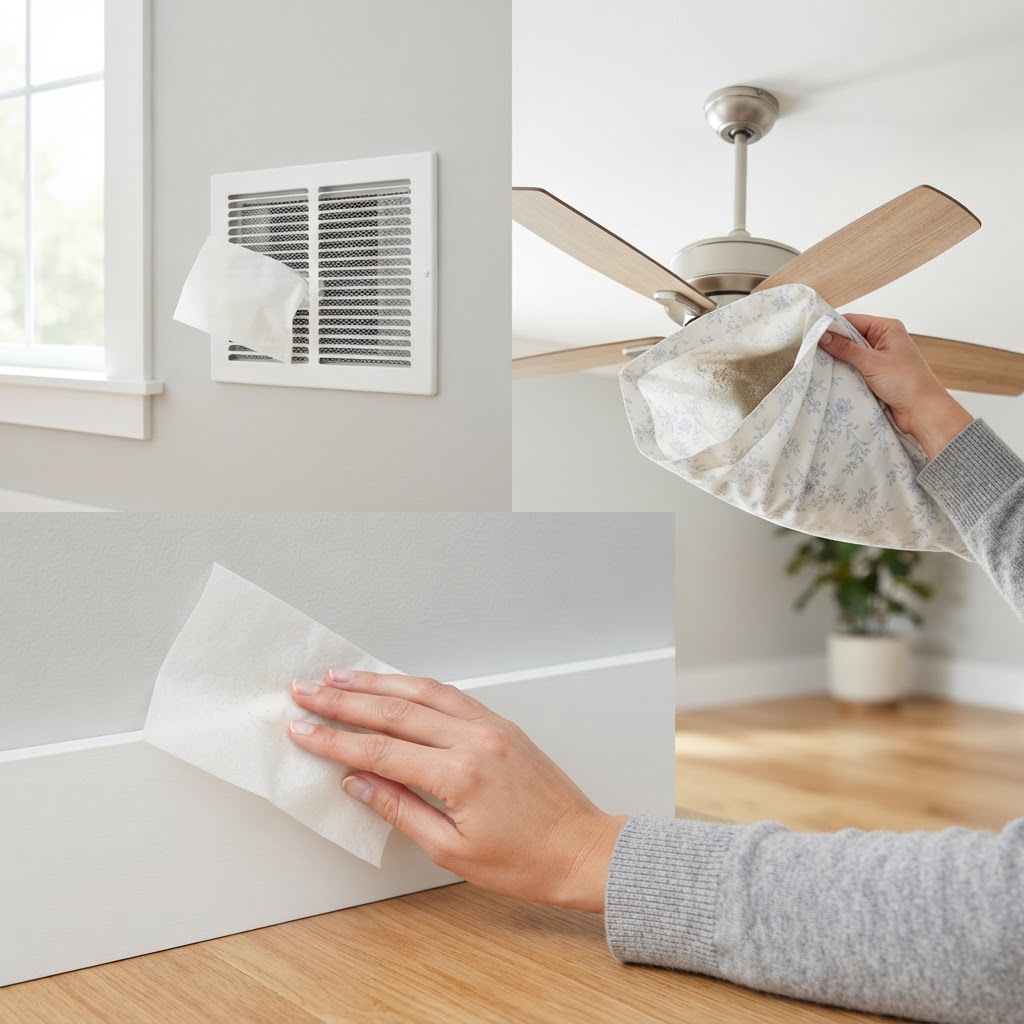
There are far better ways to spend your weekend than negotiating terms of surrender with stubborn dust bunnies. You take an entire Saturday afternoon to scrub every surface until it shines, yet by Tuesday morning, a thin, fuzzy layer has quietly recolonized your home. It feels less like routine housekeeping and more like an unwelcome, unpaid second shift.
Dust is notoriously relentless, but it is not completely invincible. Most people tackle dusting with the wrong tools and backwards techniques, inadvertently launching microscopic debris into the room only to have it settle right back where it started. Even worse, standard dusting leaves behind a static charge that acts like an invisible tractor beam for airborne fibers, pet dander, and pollen.
If you want to break the endless cycle of dusting, you need smarter tactics. By focusing on three notorious dust magnets: ceiling fans, HVAC vents, and baseboards: and using two clever household shortcuts, you can capture dirt without the mess and coat surfaces in a protective barrier that repels dust for weeks. Here is how to clean smarter, cut your chore time in half, and keep your living spaces cleaner for much longer.
The Physics of Dust: Why Fans, Vents, and Baseboards Suffer Most
To outsmart dust, it helps to understand why it congregates so aggressively on certain surfaces while leaving others relatively untouched.
Ceiling fans and HVAC registers sit directly in your home's main airflow pathways. Ceiling fan blades slice through the air at high speeds, creating friction that generates a constant static electric charge. This static charge turns each blade into a high-powered magnet for microscopic particles drifting through the room. Combine that static pull with kitchen grease vapors or everyday indoor humidity, and you get that stubborn, sticky gray grime that refuses to wipe away with a simple dry rag.
Baseboards suffer from a different environmental vulnerability: gravity and ground-level airflow. Warm air rises toward your ceiling while cooler air drops toward the floor, dragging dust, pet hair, and tracked-in grit along with it. When that sinking air brushes past your baseboards, electrostatic forces hold those particles firmly against the baseboard paint. Because baseboards feature horizontal ledges, dust has a convenient shelf on which to settle and accumulate.
Traditional feather dusters do little to solve this problem. In fact, flicking a feather duster across a ceiling fan or baseboard merely sends fine particulate matter airborne, where it floats for an hour before settling directly back onto your furniture. True dust management requires two distinct phases: contained extraction and static prevention.
The Pillowcase Method: Dusting Ceiling Fans Without the Avalanche
Cleaning a ceiling fan often feels like a trap. The moment you run an ordinary duster across the top of a blade, a shower of compacted, greasy dust cascades directly onto your sofa, your dining room table, or your hair. Suddenly, a five-minute touch-up triggers an emergency vacuuming and upholstery-cleaning marathon.
There is a brilliantly simple way to clean ceiling fans without spreading a single speck of dirt across the room: the humble pillowcase.
Step-by-Step Fan Cleaning
- Power down completely: Turn off the fan at the wall switch and, if possible, the remote control. Never attempt to clean a fan while the motor is humming or blades are spinning.
- Grab an old pillowcase and microfiber cloth: Use a standard cotton or flannel pillowcase you no longer use on your bed. Dampen the inside lightly with a mist of water or a mild eco-friendly multi-surface spray, keeping the outside dry to your touch.
- Slip the case over the blade: Climb onto a sturdy stepladder, positioning yourself safely beneath one blade. Slide the pillowcase entirely over the fan blade, encasing it like a hand in a mitten.
- Press and slide: Place your hands on the top and bottom of the blade through the fabric. Apply firm pressure and pull the pillowcase smoothly back toward yourself. Every clump of dust, pet hair, and lint gets pulled off the blade and trapped entirely inside the pillowcase.
- Repeat and inspect: Move your ladder around the perimeter, repeating the process for each blade. Once all blades are cleared, take the pillowcase outside, turn it inside out over your trash bin to shake out the debris, and wash it with your rag laundry.
Don't Forget the Motor Housing
Once the blades are wiped down, direct your attention to the fan motor housing and light fixtures. Dust gathers inside the ventilation slots of the motor housing, insulating the motor and causing it to run hotter and less efficiently. Use the soft brush attachment of your vacuum cleaner to gently draw debris out of these crevices. Finish by wiping down the glass globes or bulb surrounds with a damp microfiber cloth to instantly brighten your room's ambient lighting.
Cleaning HVAC Vents and Registers Without Blowing Dirt Everywhere
Your heating and air conditioning registers work hard year-round to circulate fresh air across your home. Unfortunately, they also function as primary collection points for lint, hair, and fine particulate matter. When dust collects on your register grates, your heating system works harder, indoor air quality suffers, and tiny dust particles are constantly blasted back into your living areas.
Many homeowners attempt to spray cleaners directly at vent grates while they are attached to the wall or ceiling. This is a mistake. Direct spraying creates a sticky slurry that drips behind your drywall and gums up the ductwork entrance.
The Butter Knife and Microfiber Wrap
If your vents only have light surface buildup, you do not need to unscrew them from the wall:
- Take a standard butter knife or flat putty knife.
- Wrap a high-density microfiber cloth securely around the blade.
- Dampen the wrapped cloth with warm water mixed with a drop of gentle dish soap or white vinegar.
- Slide the flat, wrapped tool directly between each louver of the vent grate.
The thin profile of the knife lets you reach deep into each slot, while the microfiber picks up and locks away greasy dust without pushing it into the duct behind the wall. Swap the side of the cloth as it soils so you are always cleaning with a fresh surface.
The Deep Soak for Removable Vents
For vents in kitchens, bathrooms, or high-traffic hallways that have not seen deep cleaning in a while, a complete reset works wonders:
- Remove the screws securing the vent cover to the floor, wall, or ceiling.
- Fill a laundry sink or bathtub with warm water and a generous squirt of degreasing dish soap.
- Submerge the metal grates and let them soak for ten to fifteen minutes to dissolve gummy kitchen grease and settled oils.
- Gently scrub the louvers with a soft-bristle scrub brush or old toothbrush to lift stuck-on gunk.
- Rinse thoroughly with clean warm water and let the grates dry completely before reinstalling them. While the grates are soaking, slide your vacuum hose as far into the duct opening as comfortably possible to retrieve loose dust and lost pet hair.
The Dryer Sheet Shield: How to Keep Baseboards Clean for Months
Baseboards frame every room in your home, providing clean architectural lines that anchor your interior design. However, when baseboards are caked in dark scuffs and gray fuzz, they make even the tidiest rooms feel slightly neglected.
The challenge with baseboards is not just getting them clean; it is keeping them clean. Because baseboards are coated in paint or lacquer, walking across carpets or moving furniture nearby creates localized friction. That friction builds an electrostatic charge along the baseboards, pulling floating dust straight onto their narrow top edges.
Here is where an ordinary household staple transforms your cleaning routine: dryer sheets.
Why the Dryer Sheet Hack Works
Dryer sheets are engineered with anti-static conditioning agents. In the laundry cycle, these ingredients transfer to fabric fibers to neutralize negative static charges and soften threads. When applied to hard surfaces, that same coating leaves behind a microscopically thin, non-sticky anti-static film. Dust particles that would normally cling to the baseboard lose their electrostatic bond, sliding off or staying airborne until your regular vacuum catches them.
Putting the Hack into Practice
To make this trick work, you must prepare the surface first. Applying a dryer sheet to a filthy baseboard will merely smear the existing grease around.
- Phase 1: Clear the bulk grime. Run the brush attachment of your vacuum cleaner along the entire length of the baseboards to pull away loose pet hair, sand, and large dust bunnies.
- Phase 2: Wash the paint. Wipe the baseboards down with a microfiber cloth dampened in warm water and a splash of mild, plant-based cleaner. Remove stubborn black scuff marks from shoes or vacuum wheels using a damp melamine sponge or a dab of baking soda paste, scrubbing gently to protect the paint sheen.
- Phase 3: The anti-static seal. Once the trim is completely dry, grab a fresh or lightly used dryer sheet. Wipe it firmly along the top ledge, the face, and the lower quarter-round seam of the baseboard. You will notice an immediate slickness to the surface, accompanied by a light, pleasant fragrance.
If you prefer to avoid commercial dryer sheets or use fragrance-free alternatives, you can achieve a similar anti-static effect using a DIY spray. Mix two cups of distilled water, one tablespoon of white vinegar, a half-teaspoon of vegetable glycerin, and a drop of olive oil in a spray bottle. Shake well, mist lightly onto a clean microfiber cloth, and buff your baseboards. The tiny amount of glycerin acts as an anti-static barrier that stops dust from bonding to the surface.
Environmental Habits to Slow Down Dust Accumulation
While targeted hacks make cleaning much faster, modifying your daily environment helps cut down the total volume of dust your home generates in the first place.
Maintain Balanced Indoor Humidity
Static electricity flourishes in dry indoor air, especially during chilly winters across British Columbia when home heating systems run continuously. Maintaining an indoor relative humidity level between 40 and 50 percent substantially reduces static charges on your walls, fans, and flooring. Consider running a humidifier during peak winter months to keep both your respiratory tract comfortable and your baseboards dust-resistant.
Upgrade Your Furnace Filters
Your central heating system is essentially a giant room air cleaner. If you rely on cheap, fiberglass furnace filters that look like spun sugar, you are only stopping debris large enough to choke the furnace motor. Upgrade to a pleated filter with a MERV rating between 8 and 11. These filters trap microscopic pollen, mold spores, and pet dander before they circulate onto your fan blades and registers. Remember to change them every two to three months, particularly if you share your home with furry family members.
Embrace an Indoor Shoe-Free Policy
Up to 80 percent of the dirt and particulate matter found on residential floors is tracked in from the outdoors on the soles of footwear. Establishing a firm shoes-off policy at the front entryway stops soil, asphalt dust, and pollen at the perimeter of your home. Pair your entrance with an abrasive outdoor scraper mat and a moisture-absorbing indoor runner to capture grit before it ever reaches your living room trim.
Frequently Asked Questions
Can I use used dryer sheets instead of fresh ones?
Yes, used dryer sheets from your laundry hamper work remarkably well. While they have lost some of their original softening agents in the dryer, they retain more than enough anti-static properties to treat hard surfaces like baseboards and metal vents. Reusing them is also an eco-friendly way to get a second life out of single-use household items.
Will the dryer sheet hack damage painted or stained wood baseboards?
When used properly on fully cured, painted, or sealed wood trim, dryer sheets are completely safe. The coating they leave behind is exceptionally light. However, if your baseboards feature raw, unsealed wood, or fragile antique finishes, avoid synthetic dryer sheets. Instead, stick to a dry microfiber cloth followed by a specialized natural wood conditioner or beeswax polish.
How often should I deep-clean ceiling fans and vents?
For most homes, cleaning ceiling fans and HVAC vents every two to three months is ideal. If you live in a multi-pet household, run fans 24/7, or keep windows open frequently during warm summer months, bumping that frequency up to once a month keeps buildup manageable and prevents motor strain.
Why does my ceiling fan wobble after I clean the blades?
Ceiling fans are carefully balanced mechanisms. If your fan begins wobbling after you wipe down the blades, one of two things likely happened. Either a heavy, uneven buildup of dust was removed from only some blades, or you accidentally bent a metal blade bracket while applying downward pressure during cleaning. Check to ensure all blade screws are tightened securely to the motor housing and gently bend any misaligned blades back into level alignment.
Let the Professionals Handle the Deep Details
Keeping on top of hard-to-reach ledges, ceiling fixtures, and detailed floor trim takes time, agility, and genuine patience. When your personal schedule gets busy, detailed tasks like baseboard scrubbing and vent maintenance often get pushed to the bottom of the list. That is completely normal.
At Sweep Dreams Cleaning Services, we believe your weekends belong to you, not your dust rags. Whether you need a comprehensive seasonal deep clean to reset every corner of your home or reliable recurring cleans to keep your surfaces sparkling year-round, our insured, WCB-certified team is here to help. We proudly serve homeowners and businesses across the Tri-Cities, New Westminster, Burnaby, Pitt Meadows, Maple Ridge, and Langley with detail-oriented care and eco-friendly products.
Reach out to Sweep Dreams Cleaning Services today for a transparent, stress-free quote, and let us turn your clean home dreams into a reality.